“सेवा के 25 साल” प्रधानमंत्री श्री नरेन्द्र मोदी ने वैश्विक मंच पर बढ़ायी भारत की प्रतिष्ठा और मान-सम्मान -डॉ. मोहन यादव
यशस्वी श्री नरेन्द्र मोदी के गुजरात...

सही खबर……सही असर…. Proud To Be First E-News portal of Madhya Pradesh….




यशस्वी श्री नरेन्द्र मोदी के गुजरात...

इंदौर। UPI भुगतान पर प्रस्तावित मर्चेंट...

In a small town in Madhya...
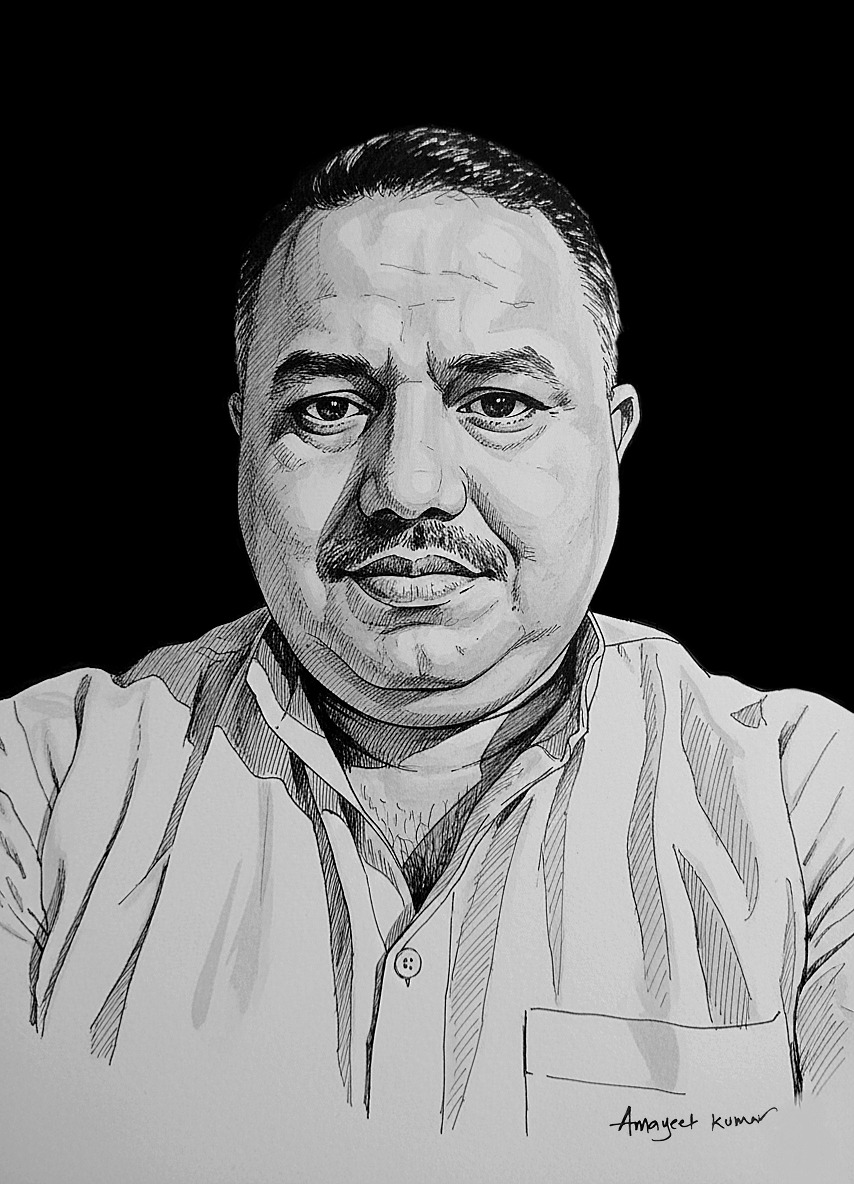
Kailash Chandra
The 18th BRICS Summit, held in New Delhi on 12–13 September 2026, cannot be reduced to just another international conference. Its significance lies much beyond the formal meetings of heads of government. Held under Bharat’s chairmanship, the summit reflected an important transition in the global order—from a largely unipolar and bipolar framework towards a more multipolar world.
Bharat used the opportunity not merely to demonstrate its diplomatic presence, but to articulate the aspirations of the Global South and connect them with its own national interests.
Throughout its BRICS chairmanship, Bharat placed Resilience, Innovation, Cooperation and Sustainability at the centre of its approach. From terrorism and trade to local currencies and digital public infrastructure, from Artificial Intelligence and healthcare to Industry 4.0 and reforms in global financial institutions—the New Delhi Declaration sought to expand BRICS from a political grouping into a practical platform for development and global cooperation.
The Real Test: Did Bharat Change the BRICS Agenda?
The success of any international presidency is not measured by the number of meetings held. It is measured by the extent to which the chairing country is able to influence the direction of the agenda.
Under Bharat’s chairmanship, more than 400 meetings and participation programmes were organised across 30 cities. This gave BRICS a wider social, economic, technological and institutional connect with Bharat. More importantly, Bharat tried to ensure that BRICS did not become merely an anti-Western platform. It pushed the grouping towards solution-oriented cooperation.
This is perhaps Bharat’s most significant diplomatic achievement.
Bharat understands a fundamental reality of contemporary geopolitics: no country can secure its national interests by permanently aligning itself with one particular camp. Its approach can therefore be summed up simply: Cooperation with all, but decisions in the national interest.
Terrorism: Bharat’s Clear and Consistent Stand The clear reference to terrorism, terrorist financing, safe havens and cross-border terrorism in the BRICS deliberations is particularly significant for Bharat.
After incidents such as the Pahalgam terror attack, terrorism is not merely a diplomatic issue for Bharat. It is a direct national security concern.
Bharat has consistently maintained that terrorism cannot be divided into “good” and “bad” terrorism, nor can terrorists be given different labels depending upon political convenience.
A country cannot claim to oppose terrorism while allowing its territory, institutions, financial channels or networks to be used for supporting it. Therefore, the fight against terrorism must go beyond political condemnation. It must include action against terrorist financing, digital networks, arms and narcotics trafficking, recruitment and radicalisation, along with stronger international legal mechanisms. This is where Bharat has an opportunity to convert diplomatic consensus into meaningful security cooperation.
Global South: An Opportunity and a Responsibility
The expansion of BRICS is not merely a matter of adding new members. It represents the growing political and economic weight of the Global South. Bharat has consistently argued for greater representation of developing countries in institutions such as the United Nations Security Council, the International Monetary Fund, the World Bank and the World Trade Organization. For Bharat, this is both an opportunity and a responsibility.
Its growing credibility in the Global South does not come merely from its population or economic size. It also comes from its own development experience. Bharat has demonstrated how democracy can coexist with large-scale development; how digital public infrastructure can promote financial inclusion; how affordable medicines can strengthen healthcare; and how space technology and digital governance can be used for public welfare.
Therefore, if Bharat seeks to provide leadership to the Global South, it must offer more than political speeches. It must become a leadership that provides solutions. That is where the New Delhi BRICS Summit becomes important.
BRICS Is Not an Anti-Western Alliance
To describe BRICS simply as an anti-Western alliance would be a strategic misunderstanding. Bharat’s foreign policy itself provides the answer.
Bharat is a member of BRICS, an active participant in the QUAD and G20, engaged with the Shanghai Cooperation Organisation, maintains a long-standing strategic relationship with Russia, and is simultaneously deepening strategic and economic partnerships with the United States and Europe.
This is strategic autonomy in practice.
In today’s world, Bharat does not seek to replace one power bloc with another. Its objective is to build sufficient economic, technological, military and diplomatic strength to engage with every major power centre according to its own national interests.
Therefore, Bharat’s active role in BRICS should not be interpreted merely through the prism of its relations with Russia or China. It is part of a much larger strategy of multi-alignment and strategic autonomy.
Not the End of the Dollar, but Diversification of Payments
The discussion within BRICS on local currencies and greater cooperation between payment systems is important. But there is no need to exaggerate its significance. BRICS has not introduced a common currency. Nor has it announced the immediate end of the dollar-based financial system.
The practical objective is different: to create more options in international trade and payments.
If countries can increasingly settle bilateral trade in their own currencies, connect their payment systems and reduce transaction costs, dependence on the dollar can gradually be reduced in selected areas.
For Bharat, this can become an important opportunity. But there is an important economic reality that cannot be ignored. Changing the payment mechanism alone will not eliminate a trade deficit. If Bharat wants local-currency trade to succeed, it must simultaneously increase the competitiveness and volume of its exports. This is where BRICS diplomacy must connect with domestic economic policy.
Bharat’s Digital Model: Beyond Aadhaar and UPI
Bharat’s digital public infrastructure has emerged as one of its important global strengths.Digital identity, instant payments, digital governance and financial inclusion have demonstrated how technology can be used at a massive scale for public benefit.
The growing BRICS interest in digital public infrastructure therefore offers Bharat a major opportunity to share its experience with the wider Global South.But Bharat must be careful not to present its digital success merely as a collection of technological products.
The real strength lies in the ecosystem: digital identity + banking + telecom + payments + regulation + governance + citizen participation.
Therefore, Bharat should not merely export digital technology. It should share its complete experience of digital governance.
That is what can make Bharat a long-term technological partner of the Global South.
AI, Healthcare and Industry: The New Frontiers of Power
The future of global power will not be determined by military strength alone. Artificial Intelligence, biotechnology, healthcare, semiconductors, space, energy and Industry 4.0 are rapidly emerging as new determinants of national power. Bharat has rightly placed AI among the important areas of BRICS cooperation. The objective should be to promote AI that is inclusive, trustworthy, secure and human-centric.
This is particularly important for the Global South. If the benefits of the AI revolution remain concentrated in a handful of developed countries and large technology corporations, digital inequality could become the next form of economic inequality.
Healthcare is another area where Bharat has a strong comparative advantage.
Affordable medicines, vaccines, medical training and large-scale healthcare delivery provide Bharat with considerable scope for cooperation with developing countries.
Industry 4.0, skill development, MSMEs, innovation and startup cooperation can similarly create new opportunities.
But the challenge before Bharat is unmistakable:
Bharat must move from being a large consumer market to becoming a major technology creator.
China: Competition Where Necessary, Cooperation Where Possible
The future of BRICS will also depend significantly on how India-China relations evolve.
The border issue, trade imbalance and strategic competition between the two countries are realities. They cannot simply be wished away.
At the same time, diplomacy is not about pretending that differences do not exist. It is about managing differences while exploring areas of mutual interest.
Dialogue on border peace, trade, market access, supply chains and connectivity can serve Bharat’s interests. But dialogue must never be confused with dependence. Bharat needs to maintain peace as well as economic balance in its relationship with China. Where competition is necessary, Bharat must compete. Where cooperation is possible, Bharat should cooperate. Where national security is involved, Bharat must remain firm. That is mature strategic autonomy.
Russia, the West and West Asia: The Balancing Act
Bharat’s relationship with Russia remains important in areas such as defence, energy, technology and long-term strategic cooperation.
At the same time, the United States and Europe remain important partners in trade, investment, technology and strategic cooperation.
Bharat’s challenge is not to choose one relationship against another. It is to manage all these relationships according to its own national interests.
The same principle applies to West Asia.
Energy security, the Bharatiya diaspora, trade, maritime routes and regional stability are all directly linked to Bharat’s interests.
The message is therefore clear: Bharat is not a party to global conflicts. It stands for peace and stability—but not at the cost of its national interests.
The Real Challenge: Turning Diplomatic Capital into Economic Power
Bharat has certainly strengthened its diplomatic position through the New Delhi Summit.
But the final test will not be visible on the conference stage.
It will be visible in the Bharatiya economy.
Trade imbalance with China, large imports from Russia and dependence on external sources in several strategic sectors show that Bharat needs not merely more trade, but a qualitative transformation of its trade profile.
BRICS can open new markets for Bharatiya products, create alternative payment mechanisms, expand technological cooperation, attract investment and increase Bharat’s economic presence across the Global South.
But opportunities will become results only when Bharat strengthens: manufacturing, research, skills, logistics, quality, export finance and domestic value addition.
The greatest success of BRICS for Bharat will come when diplomatic capital is converted into:
factories, laboratories, startups, exports and employment.
Conclusion: Bharat Needs Results, Not Merely a Platform
The New Delhi BRICS Summit has made one thing clear:
Bharat is no longer merely a spectator in the changing global order. It wants to play a role in shaping it.
A firm stand against terrorism, a stronger voice for the Global South, reform of multilateral institutions, greater use of local currencies, digital public infrastructure, Artificial Intelligence, healthcare, Industry 4.0 and strategic autonomy—all these developments point towards a larger Bharatiya vision.
But Bharat needs results more than rhetoric.
Bharat’s real success in BRICS will come when:
diplomatic influence is converted into economic opportunity; economic opportunity into technological capability; technological capability into greater Bharatiya exports; and all these together into stronger strategic autonomy.
BRICS is neither the declaration of the end of the dollar, nor the end of the Western system, nor the beginning of a new military alliance.
It is a platform through which countries are exploring new possibilities of cooperation, greater strategic choices and a more balanced global order.
For Bharat, the message is ultimately simple:
Cooperate with all. Compete wherever necessary.
Remain open to dialogue. Remain firm on national security. And take every major decision in the national interest of Bharat.
-Kailash Chandra