नीमच में शीघ्र शुरू होगा एयरपोर्ट, सर्वसुविधायुक्त स्टेडियम का होगा निर्माण : मुख्यमंत्री डॉ. यादव
मुख्यमंत्री डॉ. मोहन यादव ने कहा...

सही खबर……सही असर…. Proud To Be First E-News portal of Madhya Pradesh….





मुख्यमंत्री डॉ. मोहन यादव ने कहा...

मुख्यमंत्री डॉ. मोहन यादव ने कहा...

मुख्यमंत्री डॉ. मोहन यादव ने कहा...

When the tender green of new leaves returns to the trees, when the air softens after winter’s retreat, and when fields awaken with the promise of fresh harvest, Bharat quietly steps into a new cycle of time. The Chaitra Shukla Pratipada is not merely a date on a calendar but the day when almighty created this world in which human life consciously aligns itself with the rhythms of nature and the cosmos. In the Bharatiya understanding of time, a year does not begin by arbitrary convention; it begins when creation itself renews. Across the country it is celebrated as Ugadi, Gudi Padwa, Cheti Chand, Navreh and by many other names, yet its essence is one: the beginning of creation’s cycle. In the Bharatiya conception of time, the year begins when life begins again.
It is therefore striking that the official National Calendar of India does not recognize this civilizational New Year as its foundation. Instead, it follows the Saka Era, adopted on the recommendation of the 1955 Calendar Reform Committee. That decision, taken in the early years of the Republic for administrative convenience, deserves reconsideration today, not out of sentiment, but out of historical clarity and cultural coherence. Every year some resolutions are taken but this new year we need to reconsider the decisions to cherish the History of Bharat. Among them is the question of India’s official calendar.
In 1955, the Calendar Reform Committee recommended adoption of the Saka Era as the basis of India’s National Calendar. Its objective was administrative uniformity and scientific clarity. Yet, a close reading of the Committee’s own its survey report of “History of the Calendar in Different Countries Through the Ages” reveals facts that raise legitimate grounds for reconsideration today.
The Committee’s own report acknowledged that the Saka Era is “admittedly of foreign origin,” introduced by Saka (Scythian) ruling powers and propagated by Western Satraps. These rulers, as the report notes, did not claim imperial sovereignty but used subordinate titles such as Kshatrapa.
By contrast, the Vikrama Samvat is rooted in the long-standing civilizational memory of a decisive victory by an indigenous ruler Vikramaditya of Ujjain over foreign invaders around 57 BCE. It is not merely an era of historians; it is an era of lived society. Its association with the legendary emperor Vikramaditya of Ujjain, symbolizing resistance against foreign incursions and the restoration of indigenous sovereignty, gave it enduring prestige.
An even older framework exists in the form of the Yuga-based reckoning, often called Yuga-abda or Kali Yuga Era, which counts years from the beginning of the current cosmic age. This system reflects the classical Indian understanding of time as cyclical and cosmological rather than purely political. Notably, the neighbouring Hindu nation Nepal continues to use the Yuga-based era in its traditional reckoning alongside the Vikram Samvat as its official calendar, demonstrating that indigenous systems can function effectively in modern governance.
The question, therefore, is not whether India can adopt such a system, it is why it has not.
Supporters of the Saka Calendar often emphasize its “scientific” basis and uniformity. These were legitimate concerns in the mid-twentieth century, when newly independent India sought administrative standardization. However, the technical advantages of the Saka system are not exclusive. Modern astronomy, digital timekeeping, and global synchronization do not depend on any particular historical era. The Gregorian calendar itself, used internationally, coexists with numerous national calendars without difficulty.
What a national calendar primarily conveys is identity. France retains the Gregorian system but commemorates the Revolution as a foundational moment. Israel uses the Hebrew calendar for official and religious life. China celebrates the Lunar New Year with state recognition despite using the Gregorian system for global interaction. Civilizations do not abandon their temporal traditions simply because international coordination requires a common framework.
Chaitra Shukla Pratipada offers a uniquely Indian starting point which is rooted in seasonal reality, agricultural rhythm, and astronomical alignment. In classical texts, it is associated with the beginning of creation itself. This is not mythological excess; it is a symbolic articulation of ecological time.
Replacing the Saka Era with Vikram Samvat or formally recognizing Yuga-abda as the basis of the National Calendar would therefore accomplish several things at once. It would align official timekeeping with the New Year celebrated by millions of citizens. It would restore continuity with indigenous historical memory. It would affirm that modern India’s institutions draw legitimacy not only from colonial inheritance but from civilizational depth.
Such a change need not be abrupt or exclusionary. The Gregorian calendar would continue for international communication. Administrative transition could be gradual, with dual dating during an interim period. What matters is the symbolic center: which era represents the nation’s own temporal identity.
Critics may argue that reopening this issue risks unnecessary disruption. Yet societies routinely revisit foundational choices as their confidence grows. The adoption of indigenous place names, the revival of classical knowledge systems, and the renewed emphasis on cultural heritage all reflect a broader movement toward civilizational self-articulation. Calendar reform would be a natural extension of this process.
Timekeeping is not neutral. It encodes memory, authority, and worldview. An era associated with foreign satraps reflects one narrative of history; an era associated with indigenous sovereignty or cosmic cycles reflects another. A nation secure in its identity need not hesitate to choose the latter.
The time has come to reconsider this decision with maturity, balance, and civilizational self-confidence. The Government of India may constitute a high-level interdisciplinary commission comprising historians, astronomers, constitutional experts, cultural scholars, and administrative authorities to undertake a comprehensive review of the National Calendar framework. Such a body should evaluate the historical, scientific, cultural, and practical dimensions of adopting the Vikrama Samvat or Yuga-based reckoning, while ensuring continuity in governance and international coordination. This would not be an act of rejection but of restoration: a measured step to harmonize state practice with the civilizational rhythms, historical memory, and living traditions of Bharat.
A nation that measures its years according to its own rhythms affirms that its future, like its spring, arises from its own soil.
Authored by-
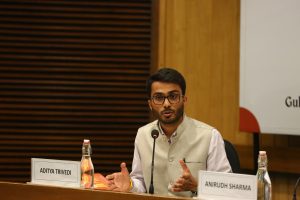
Aditya Trivedi
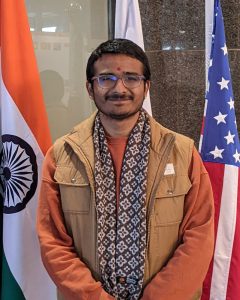
Mohit Rawal
Law Student, Delhi University