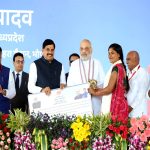
केंद्रीय गृह एवं सहकारिता मंत्री अमित शाह और मुख्यमंत्री डॉ. मोहन यादव ने भोपाल के राज्य स्तरीय गोपालक सम्मेलन में हितग्राहियों को हित लाभ वितरित किए।

सही खबर……सही असर…. Proud To Be First E-News portal of Madhya Pradesh….




केंद्रीय गृह और सहकारिता मंत्री अमित...
केन्द्र सरकार की गरीबों के लिए...
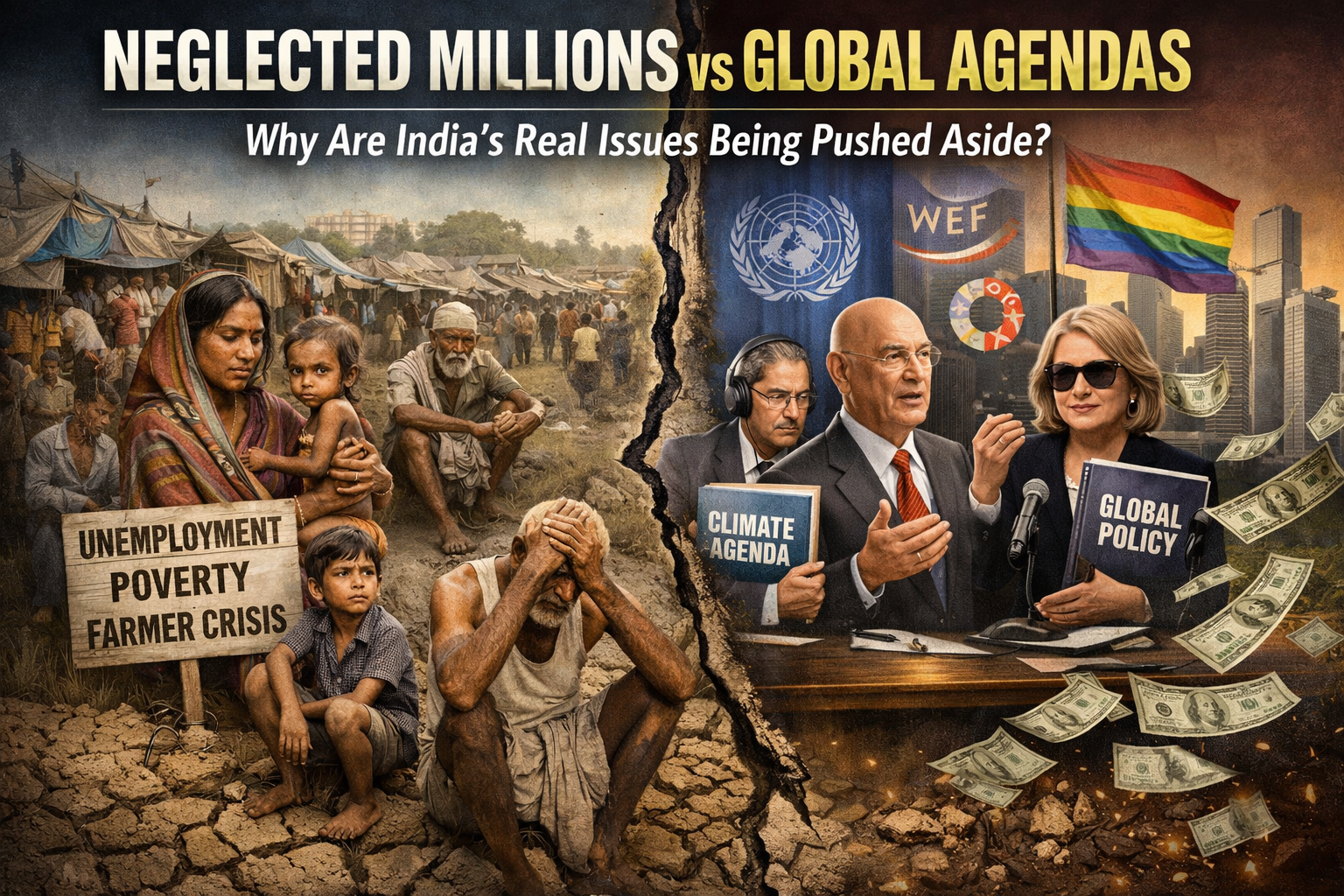
India’s socio-cultural landscape is vast, layered, and deeply diverse. Yet within this complexity, two contrasting realities demand national attention. On one side stand the 11 crore (110 million) Nomadic, Semi-Nomadic and Denotified Tribes (DNT/NT/SNT)—a population still struggling for identity documents, stable housing, access to education, healthcare and basic human rights.
On the other side is the LGBTQ+ community, whose estimated population in India is around 5–6 lakh (500,000–600,000), yet whose presence in national and international discourse has grown disproportionately due to global funding networks and narrative amplification.
This contrast raises a pressing question:-
Are global agendas overshadowing India’s genuine social priorities?
India’s Tribal Communities:- Pride, Struggle and Systemic Neglect
India’s tribal societies—whether Scheduled Tribes or DNT/NT/SNT groups—have always been an integral part of the Indian civilizational fabric. Their marriage traditions, forest knowledge, agricultural practices, music, dance, self-governance systems, and cultural autonomy all emerge from indigenous Indian cultural continuity.
However, the colonial era deliberately distorted their identity. Thinkers such as Max Müller and Thomas Macaulay introduced misleading labels like “Indigenous,” “Aboriginal,” and “Tribe,” attempting to portray Indian tribal communities as somehow separate from the mainstream civilisation. This categorization helped the British justify their exploitation of forest wealth, mineral resources, and land.
The Industrial Revolution intensified this exploitation. Colonial authorities declared forest communities “uncivilized”, restricting their traditional mobility and seizing their rights. The notorious Criminal Tribes Act of 1871 even branded entire communities as “born criminals,” creating a stigma that still lingers in many regions.
Even in independent India, this neglect did not fully end.
Key findings from the Renke Commission (2008) and the Idate Commission (2018) reveal:
• 8–11 crore DNT/NT/SNT population
• No separate census category even after 77 years of independence
• 70–80% lack identity documents—address proof, ration card, Aadhaar, etc.
• Welfare schemes rarely reach them
• Severe deficiencies in education, nutrition, healthcare
• Very limited livelihood opportunities
Which leads to an important question:-
Why does a population of 110 million remain invisible in India’s national discourse?
The Rise of LGBTQ+ Discourse: A Global Narrative in Indian Public Space
Every democratic society must ensure dignity, safety and constitutional rights for LGBTQ+ individuals. That is non-negotiable. But the issue here is not rights—it is priority and proportionality.
Compare the scale:
• LGBTQ+ populace: 5–6 lakh
• DNT/NT/SNT communities: 8–11 crore
• Media visibility: LGBTQ+ discourse overwhelmingly dominant
• Policy attention: DNT communities largely ignored
Why this imbalance?
The answer lies in the global funding ecosystem. Over the past decade, several international institutions have channelled significant financial resources into LGBTQ+ and gender-fluidity programmes in India:-
• Ford Foundation
• Open Society Foundations
• Rockefeller Network
• Human Rights Fund
• UNDP Inclusion Fund
• Global CSR alliances
These networks invest in universities, NGOs, media, digital campaigns, art festivals and cultural events—primarily to expand LGBTQ+ narratives.
Data suggests that in the last five years:
• LGBTQ+ events—lit fests, film festivals, social media conclaves—have grown by 200–400%
• Yet not a single national-level event has been organised for Nomadic or Denotified Tribes
Branding vs Reality: Why the Priorities Don’t Match
Social scholars highlight a clear pattern:-
The LGBTQ+ theme—
• aligns with corporate branding
• fits urban-progressive narratives
• resonates with Western political agendas
• attracts media and elite support
• creates global visibility for institutions
In contrast, DNT/NT/SNT communities—
• are non-urban
• lack digital influence
• are economically marginalized
• don’t fit the “global modernity” template
• do not generate “brand value”
Therefore, they remain outside public discourse.
Academic Imbalance: Queer Theory Dominates, Nomadic History Absent
In recent years, numerous leading universities have introduced:
• gender-fluidity courses
• queer studies programmes
• sexuality curriculum modules
But almost none have introduced academic studies on:-
• nomadic tribes’ history
• their traditions, art, language
• their cultural systems
• colonial-era exploitation
• continuing injustice against DNT/NT/SNT communities
This reveals a troubling reality—
India’s academic ecosystem, too, is aligning more with global narratives than domestic priorities.
Are We Being Distracted from Real Issues?
The imbalance in public discourse is not accidental.
Three forces shape it:-
1) Corporate–Global Agenda
Corporations prefer topics that strengthen their “progressive brand image,” making LGBTQ+ themes their top priority.
2) Foreign NGOs
They amplify issues that align with Western modernity narratives.
3) Media–Elite Networks
They promote themes that:
• are well-funded
• fit urban aesthetics
• carry global legitimacy
• offer personal visibility
As a result—
• 110 million Indians remain unheard
• while a 5-lakh population dominates national conversation
The Final Question: Will India Write Its Own Narrative?
India stands at a historical crossroads. It must begin a nation-scale mission to uplift its Nomadic, Semi-Nomadic, and Denotified Tribes by guaranteeing:
• identity
• land and forest rights
• education
• healthcare
• rehabilitation
• cultural autonomy
• dignity and representation
Unless India shapes its own socio-cultural discourse, real India—its real struggles—will remain in the shadows.
The Janjatiya Gaurav Diwas reminds us that the soul of India lives not only in its cities, but equally in its tribal and nomadic communities.
The time has come to break free from colonial misconceptions and modern ideological distortions, and restore dignity to the 110 million invisible citizens who are an inseparable part of India’s civilizational journey.
-Kailash Chandra